“The Heart of Hale County” gets to the root of the question

You’ve heard about the Rural Studio, and Hale County. Maybe you’ve even watched the movie Citizen Architect, but you should also read this article if you are interested in equity, design, and change. Rob Walker’s The Heart of Hale County, featured this month in Fast Company magazine, takes an in depth look at the social innovation work that has been taking place in west-central Alabama for the last two decades. But the writing is relevant to change makers working around the globe. In addition to details about work in Hale County, the article takes readers through a conversation about the most pressing questions in social impact design and architecture. Can outsiders be effective change makers in an unfamiliar place? How is success defined within the field of public interest architecture? Walker’s writing vacillates from triumphant to daunted, taking the reader along on his journey. In the end, what remains are questions, which is apt for a field trying to define itself within the context of today’s most complex and variable challenges.

Walker writes, “It’s worth celebrating design’s social successes, but it’s also worth openly assessing the limits. The potential of design to enable change has been established; maybe the promising paths forward involve the humility to recognize that lasting change is harder than it looks, and the willingness to openly debate and disagree on how to integrate differing design approaches into more wide-ranging solutions with a range of partners.”

at rural studio 8_13

photo credit Richard Elliott, during our visit to the Rural Studio, August 2013

looking up

A few weeks ago I posted an article by the Greenwood Commonwealth documenting “setbacks” that the project has faced. June, in particular, saw the team slogging through disappointments and downturns. Despite these challenges, we persevered and in July and August (and hopefully continuing into September and October) the overall project is making significant visible progress.
Thanks again to the Commonwealth, and talented staff writer Jeanie Riess, the ups and downs have been given equal coverage, and this image of the new street lights on Avenue A graced the front page last week.

lights go up

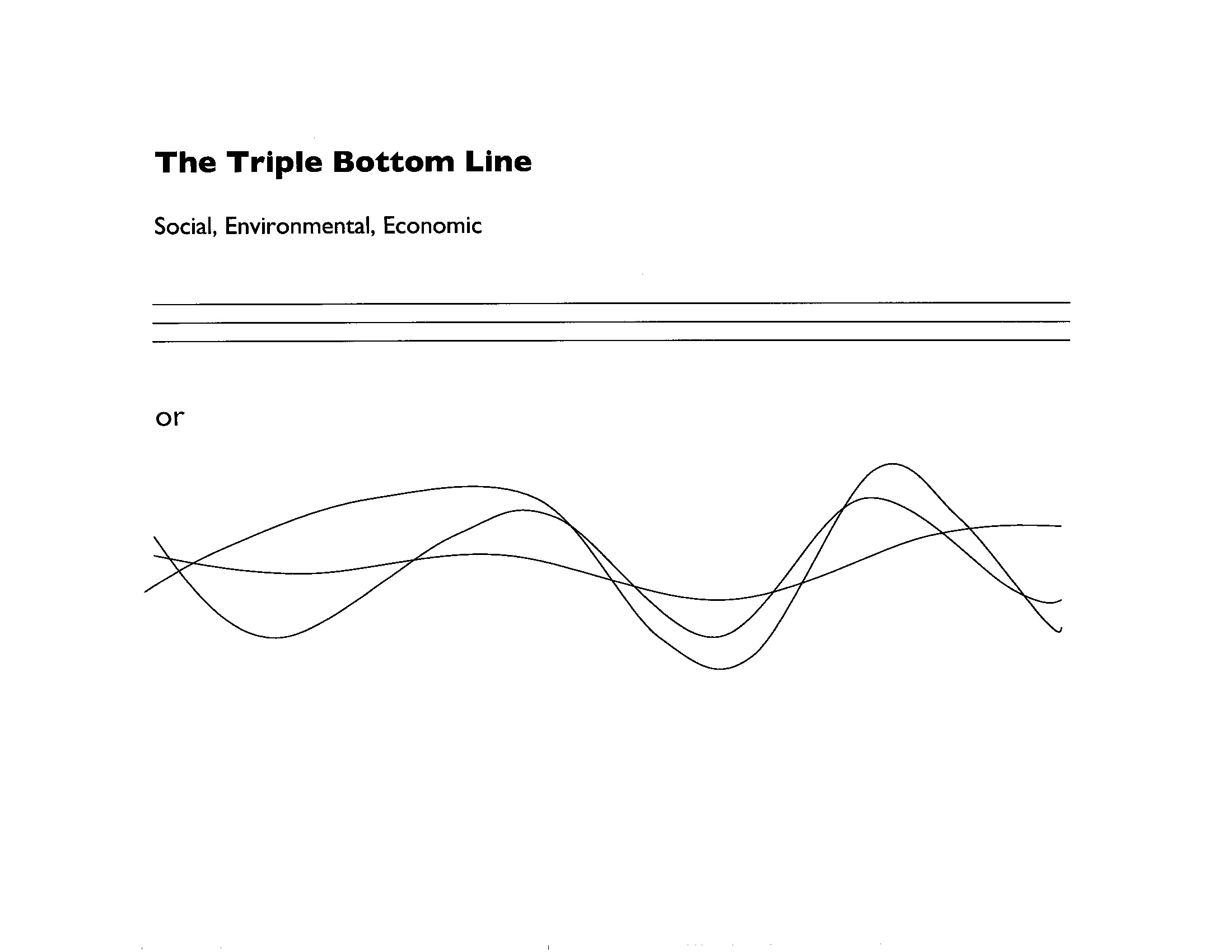
Calling for a Triple Bottom Line Design Metric (SSIR)

Public Interest Design blogger John Cary summarizes SEED (Social Economic Environmental Design), the lesser known social impact focused cousin to LEED (Leadership in Energy and Environmental Design), and the challenges to growth that this evaluation system has faced. He suggests, “Rather than remain a shoestring operation, SEED should leverage the USGBC’s vast network and resources. Both SEED and LEED would become stronger programs for it.” Read the full article on the Stanford Social Innovation Review at Calling for a Triple Bottom Line Design Metric (SSIR).

As a new advisory council focuses on the future of SEED, public interest designers are faced with a common question in this field – How can our work scale up? Does it inherently lose it’s ability to be responsive to the specific social needs of individual communities when molded to fit within the requirements of a certification program? I don’t think it does. Despite the vastness and the merited criticisms that can be leveled at LEED, the success or failure of the final product lies with the project team. Similarly, if SEED were to be applied to projects around the globe, the onus of success would remain with the designer in the field. It is the responsibility, and the joy, of public interest designers to immerse themselves within the groups that they work for, and this responsibility remains and would be amplified by an international platform from which best practices and lessons learned in triple bottom line design can be shared.

triplelines

a meeting without an agenda

flyer image

Those of us working in the field of social impact design attempt to enhance neighborhoods, introduce design where it is lacking, and reduce social and economic inequities. Though fellows work hard to serve the public and engage communities, the road to realize projects is often rocky, with the interests of various groups and individuals coming into conflict with each other, the project, or the way in which it is being implemented.

In recent weeks, local politics threw a road block in the way of the housing portion of the Baptist Town neighborhood revitalization project in Greenwood, Mississippi . The road block may have been posturing or it may have been the result of poor communication, but in either case, mud was slung and tempers rose over a deed issue. Diplomacy eventually won out, and the project only suffered slight delays. In the midst of navigating this sensitive situation, a community meeting unlike any I had previously experienced was a refreshing reminder of the big picture goals of this neighborhood wide project.

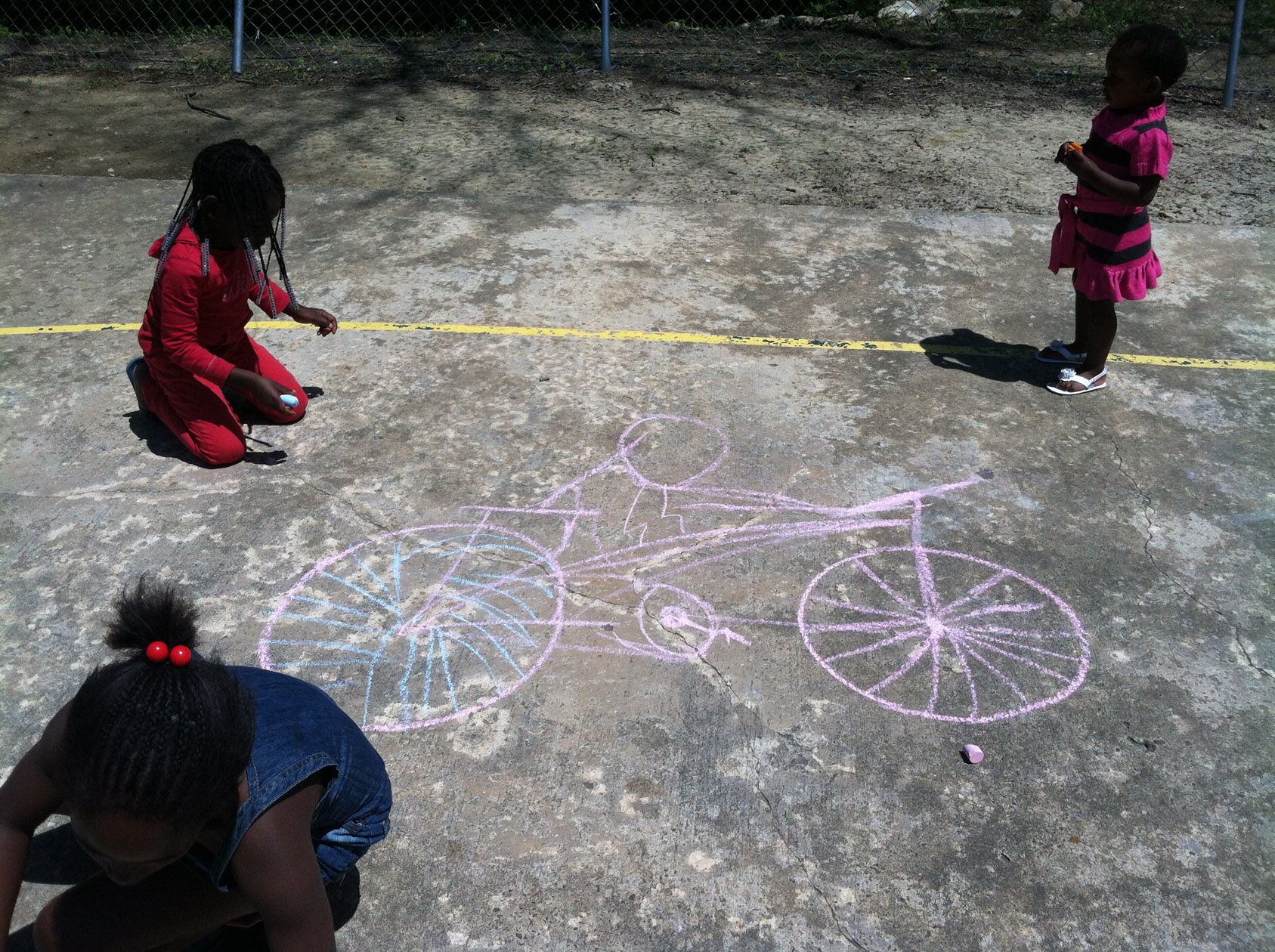
The Kids Only Community meeting on April 20th involved chalk, markers and imaginations. Neighborhood kids were invited to the playground (currently a basketball court, swings and a few spring rockers), to share their ideas of what could exist on the site. Slides and monkey bars were top recommendations, but we also asked students how this park could incorporate their favorite subject in school (The overwhelming response was math!). Project H’s LearningLandscapes served as a great precedent that allowed both the kids and the adults who helped collect feedback understand how a playground could be a fun and active space, while providing opportunities for learning and fit within a limited budget.

We collected dozens of drawings and photographed the chalk art that spread across the basketball court throughout the meeting. Kids were excited to share their ideas, especially when we asked them to dream up things they hadn’t seen before. An addition to the swing set that would make it look like a dragon, an unlimited supply of sidewalk chalk, and hills to roll down were just a few of the ideas we took away.

Though this playground is a smaller scale and less contentious project than the twenty-six home affordable housing effort that is taking place a block away, the enthusiasm and flexibility that the kids of Baptist Town shared with me on Saturday will be a reminder of the best way to approach future challenges as they arise.

bike

another sign of progress

gw cw sign

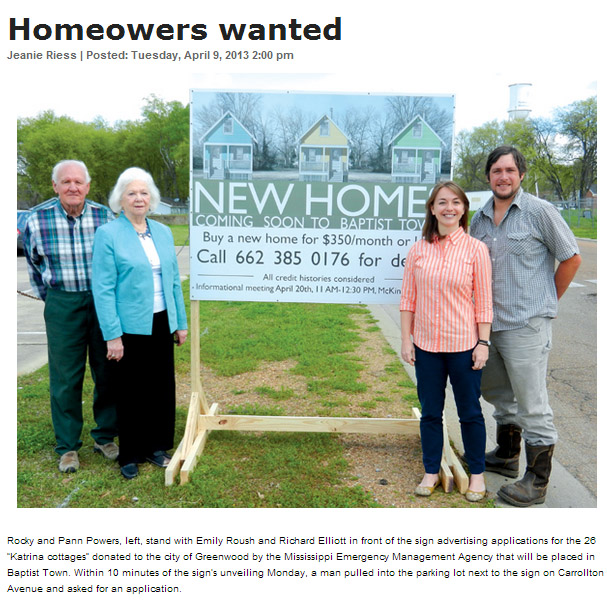
Many thanks to Jeanie Riess, a great writer for our local paper, who covered the unveiling of our new sign and ran this image and caption in the Greenwood Commonwealth today. I have had more than a dozen phone calls already from interested applicants, and two completed applications submitted. Thanks to Jeanie and everyone supporting this project!