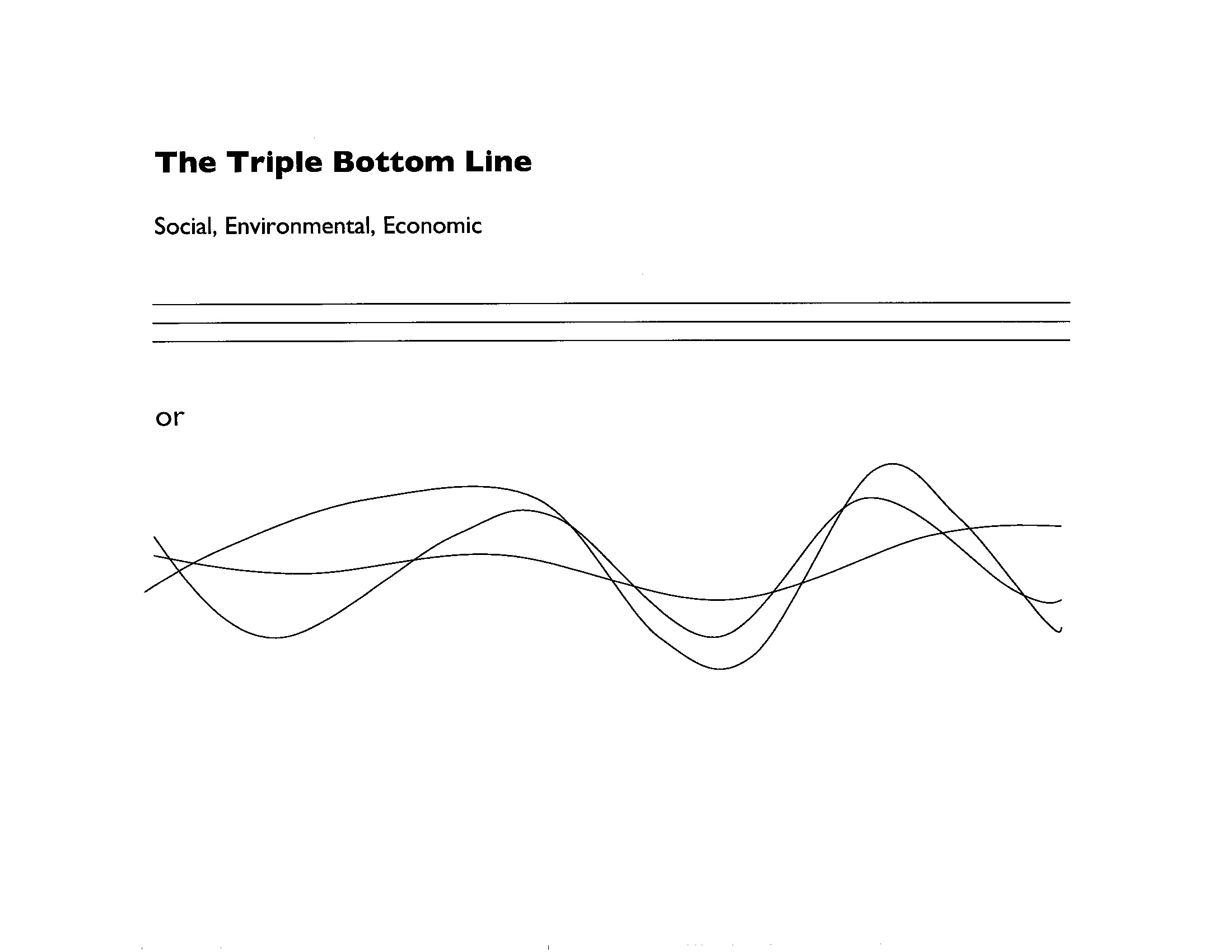
Calling for a Triple Bottom Line Design Metric (SSIR)

Public Interest Design blogger John Cary summarizes SEED (Social Economic Environmental Design), the lesser known social impact focused cousin to LEED (Leadership in Energy and Environmental Design), and the challenges to growth that this evaluation system has faced. He suggests, “Rather than remain a shoestring operation, SEED should leverage the USGBC’s vast network and resources. Both SEED and LEED would become stronger programs for it.” Read the full article on the Stanford Social Innovation Review at Calling for a Triple Bottom Line Design Metric (SSIR).

As a new advisory council focuses on the future of SEED, public interest designers are faced with a common question in this field – How can our work scale up? Does it inherently lose it’s ability to be responsive to the specific social needs of individual communities when molded to fit within the requirements of a certification program? I don’t think it does. Despite the vastness and the merited criticisms that can be leveled at LEED, the success or failure of the final product lies with the project team. Similarly, if SEED were to be applied to projects around the globe, the onus of success would remain with the designer in the field. It is the responsibility, and the joy, of public interest designers to immerse themselves within the groups that they work for, and this responsibility remains and would be amplified by an international platform from which best practices and lessons learned in triple bottom line design can be shared.

triplelines

6 months in….

June was a rocky month for this project, but the team here in Greenwood is committed to seeing this through, and I feel lucky to be part of such a positive group. After taking a few days off to recover during the 4th of July holiday, Richard and I are back in Greenwood, and rather than hiding out until we’ve figured out answers, we’ve been spending extra time in Baptist Town. A few hours with neighborhood residents each of the last three days has energized and inspired us. There is no substitute for spending time with community members in this line of work.

The following article was published in the Greenwood Commonwealth on July 2, 2013.

Baptist Town Project Suffers Setbacks

by Jeanie Riess, Staff Writer

Bill Crump says recent setbacks for the Baptist Town project won’t prevent it from moving forward.

“We are committed to getting this project completed one way or another,” the chairman of the Greenwood-Leflore-Carroll Economic Development Foundation said.

Two new setbacks recently were added to the list of challenges the project has faced since its inception in 2010.

The bill to redirect 26 “Katrina cottages” donated to the city of Greenwood by the Federal Emergency Management Agency was not picked up during a special session of the Legislature in June.

The bill would have given the city, which now owns the cottages, the authority to donate them to the Fuller Center, a nonprofit charged with installing the permanent houses. The city does not have the legal authority to make such a donation; it can only sell the cottages as surplus property.

The cottages are the kind of small structures used to provide housing on the Gulf Coast after Hurricane Katrina. The new, brightly colored homes, which are to be installed in Baptist Town to help revitalize the century-old black neighborhood in Greenwood, are sitting at Greenwood-Leflore Airport.

“We had the legislation ready,” Crump said. “Sen. (Lydia) Chassaniol and Sen. (David) Jordan were prepared to introduce the legislation to give the city the authority to donate the cottages to the Fuller Center. Rep. (Linda) Whittington and Rep. (Bobby) Howell were ready to introduce the bill to the House.”

Crump said he and Angela Curry, executive director of the economic development foundation, along with Emily Roush Elliott, the architectural fellow managing the project, had also worked with Gov. Phil Bryant’s office to introduce the bill. Only the governor has the authority to add a bill to the call of the special session.

But the Legislature was meeting to discuss the expansion of Medicaid, an issue that Crump said proved so contentious and critical that it pushed any housekeeping issues off the table.

This isn’t the first time the Baptist Town project has seen defeat in Jackson.

In April, state Rep. Willie Perkins amended the same bill to redirect the cottages to a nonprofit of his choosing, one that Crump and his team didn’t feel was a good fit for the houses. The bill died in the Senate, once again rendering the cottages ownerless.

Crump said he’s looking into other options.

“The people of Baptist Town deserve this project,” he said. “The 30 people who have made out applications deserve these houses.”

Curry agreed, and she said in an email that the economic development foundation will keep working to get the cottages placed in Baptist Town despite the setback.

“We have encountered some obstacles, but we cannot abandon this project as it is too important to the residents of Baptist Town,” Curry said. “After all, the mission of this foundation is to improve the quality of life for residents in our community. The fruition of this project will help to do just that.”

The project encountered a second bump in the road last week, when Crump’s team decided to pull out of its partnership with the Foundation for the Mid-South, the organization managing the grant money for the installment of the cottages.

Crump said the decision to split from the group came about because the Foundation for the Mid-South did not feel that the Fuller Center was qualified to handle the project.

Crump’s team, however, is committed to working with the Fuller Center.

“They’ve put up more than 30 houses in Greenwood,” he said. “So we decided to continue on with Fuller and not with Foundation for the Mid-South. We would love to continue working with Foundation for the Mid-South, but their requirements were not in accordance with our plans.”

Because the foundation was the manager of the funding provided by the Walton Family Foundation, Crump said the split will affect some of the money.

“That money will be sent back to Walton,” he said.

He insisted, however, that it would not be to the detriment of the project.

“We do have plans to at some point make a proposal straight to Walton for some phases of this project,” Crump said. “But we’re not waiting for Walton. We have other sources of funding we are going to draw from.”

For Crump, the only issue standing between the cottages and their new owners is the legal hurdle of donating them.

“Everything else is in place,” he said. “The land has been purchased; Greenwood Utilities has done the initial work with power lines and water and sewerage. We have a fantastic team of people who’ve been committed to this for months and years. Everybody really feels we have to get this completed.”
everybody likes a video

“I believe this is how we make the world safer, a better place: trying to give people access to healthcare and improving educational opportunities. And I think we really are creating the global village that we can communicate through and understand how we’re similar and how we’re different in different places.” – Richard Elliott

A lot of courses are taught today that are focused on large scale societal issues. Particularly in the field of design, students are asked to solve real world problems through studios. This is a slippery way to approach the challenges of the globe. On one hand, students are exposed to budgets and schedules, and gain broad perspectives that cannot be replicated in a classroom. They are more likely to pursue a career path defined by this immersive experience, as evidenced by so many of the graduates of Auburn’s Rural Studio. Conversely, questions of feasibility and responsibility must be considered before embarking on a project that students may not have the time or expertise to see through to be anything other than a research exercise that uses under-served populations as case studies.
In the video above, Elissa Yancey takes her students on a semester long journey that straddles the two sides of this discussion. In the weeks leading up to the trip to Tanzania, her students researched, practiced interviewing, and learned to use audio and video equipment. The film that resulted is not perfect, but the human element is really close: envelope pushing experiences for students, an easy to share message about Village Life and the organization’s mission, and no one in Tanzania was promised a business, building, or otherwise that will not appear.

something real

The Baptist Town neighborhood revitalization has existed as an idea for a long time. A really long time – the first study was conducted in 2001. When I moved to Greenwood, I knew that was the reality of the situation, but knowing about the issue hasn’t made it any easier to convince people both in and out of Baptist Town that change is happening. Further challenging, is the fact that significantly planning and preparatory steps have been necessary before we could make any tangible progress.

At last, a couple of weeks ago, we built a pocket park in the neighborhood. Though many negative opinions were shared with us by passers by (“That is just going to get torn up.”, “They are going to shoot out the lights.”, “They are going to steal the benches.”), we also got very positive comments, the most encouraging: “You’re actually doing something!”.

Construction was an adventure, with donated materials, all volunteer crews, and a rainy day for pouring concrete. The Carl Small Town Center, both directors and student workers, spent 4 days on site, and were a very flexible and hard working group. Harvard’s CDP group also joined us to lend a hand. But most importantly, neighborhood residents were also a part of the digging, building formwork, and pouring concrete.

This slideshow requires JavaScript.

At the end of the week, we had finished the majority of the work, and the biggest reward came when last Tuesday one of the previously skeptical residents told me she enjoyed sitting on the benches all weekend long. She said, “It’s my favorite place. I love it.”

We’re so glad you love it, Dorothy! We are going to keep polishing up the benches and are hoping our streetlights arrive soon, so look for updated pictures in the next couple of weeks.

MVP award

Last week was fantastic. We constructed a small park in Baptist Town where residents can sit, and people visiting via The Help tour can check out “Minnie’s” house.

Thanks to neighborhood residents who came out and volunteered, and students from Harvard’s Kennedy School and Mississippi State’s Carl Small Town Center, we finished the majority of the work in four days! All these great collaborators were invaluable…. but the MVP of the week was definitely our new F250. We couldn’t have done anything without out.

Photos, etc will be posted soon.

sidewalks

sidewalks start

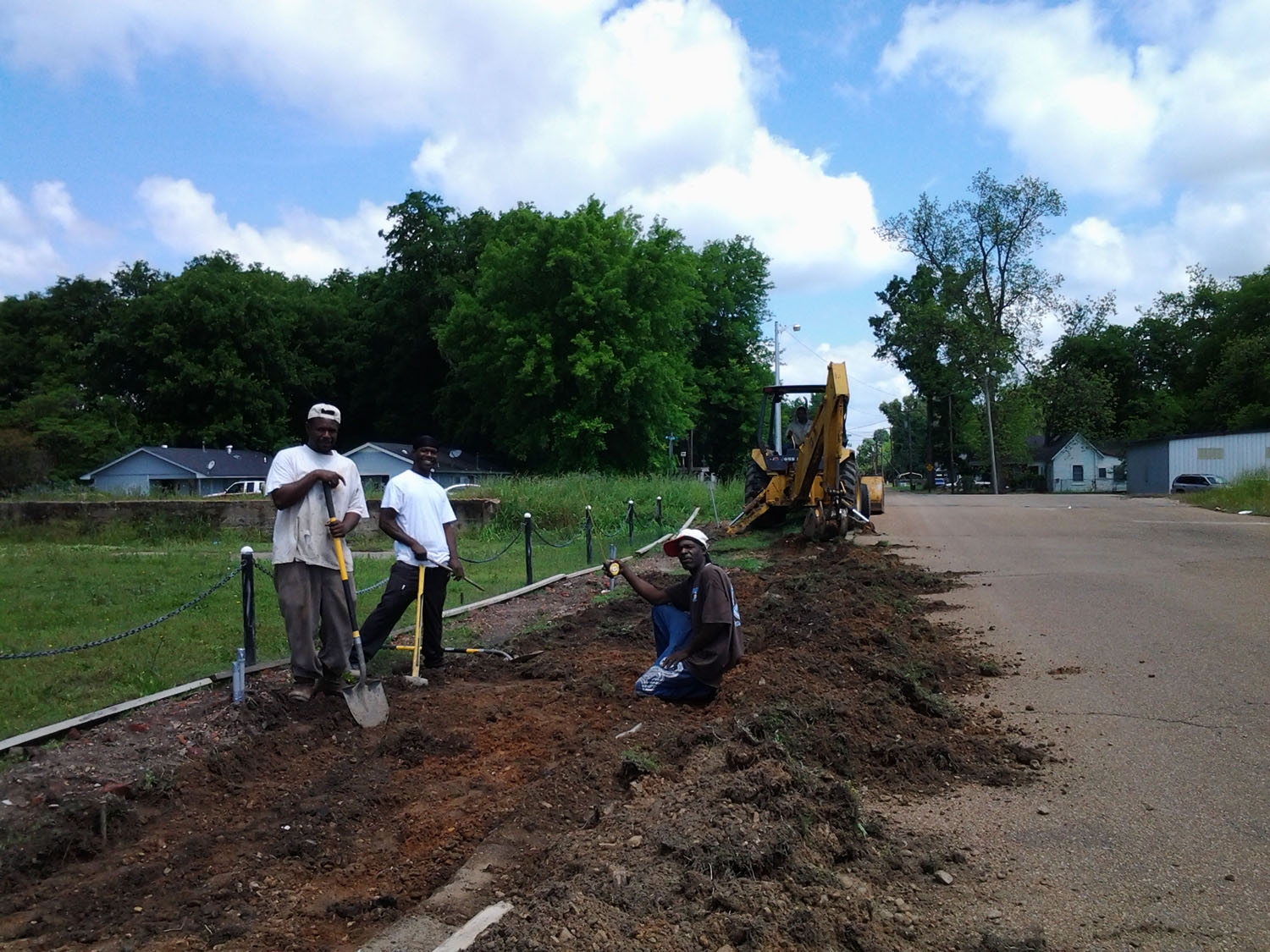
The construction of a sidewalk along one of the entryways into Baptist Town is an exciting ground breaking. Promises of projects in this neighborhood have existed for a long time, and I hope that residents are as happy to see some evidence of all the work that has been going on behind the scenes as I am.

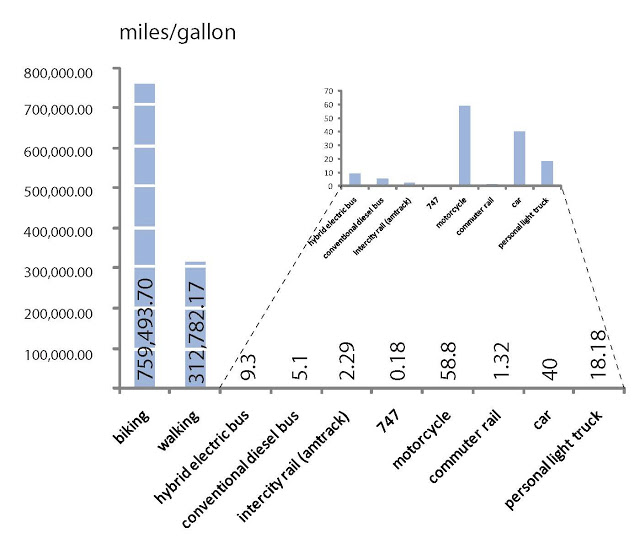
This sidewalk (and street lights and trees soon to follow) will improve the appearance of the entries to the neighborhood, but more importantly they will provide a safe place to walk. Hopefully residents will feel more comfortable walking downtown, to school or to visit friends once they don’t have to walk in the street. The prospect of people saving money, burning calories and not using gasoline reminded me of a study a friend of mine did a few years ago that proposed a lifestyle independent of oil. One of her blog posts discussed the efficiency of walking and biking over driving:

As for biking and walking, they have no competition… Biking (calculating human calorie energy expended) is equivalent to 759,493.7 miles per gallon and walking (burning 100 calories an hour) is equivalent to 314,782.17 miles per gallon.  Biking is 19,230.8 times more efficient than driving your subcompact car and walking is 7,886.4 times more efficient.  Walking burns about 60 more calories per hour than biking making it less ‘energy efficinet’, but as my roommate pointed out looking at these numbers, when it comes to your own energy, suddenly energy expenditure looks like a good thing.  After all, its renewable 🙂 Eat a sandwich. 

miles per gallon comparison

stake holders

20130502_104025

Greenwood Utilities continues to provide excellent support for the Baptist Town project even in the muddy conditions shown here. The stakes show construction boundaries and light locations for a pocket park, designed by landscape designer Brantley Snipes, to be constructed in May with students from the Carl Small Town Center and Harvard’s Kennedy School.

As we squished through the mud today, I thought of how individuals and organizations can choose to be flexible, helpful contributors to a project, or introduce difficulties and limit progress. I have encountered both here in Greenwood, but in either case they provide lessons in how to support rather than hinder projects.