positive energy

In September, the Rose Fellows went to a retreat in New York that began at the Garrison Institute, a former monastery that now hosts a variety of events focused on innovative thinking about sustainability. The peaceful setting and moments of silent reflection built into the agenda helped us reflect on ourselves and our work. My friend, and the Fellow in Yakima, Washington, Nate Poel wrote this about the experience:

This exercise was very helpful in clearing my mind of clutter and I left the Institute with several big insights:

  1. Invest in my coworkers and see them for their unique gifts and abilities. What perspectives do they have that I could learn from? Remember to nurture loving relationships and they will be there when you need them.
  2. Talk with maintenance staff before, during, and after a new development or rehab. They have more implicit knowledge about our buildings than I will ever learn in school.
  3. Get the information on how our buildings are performing to the actors, that is, maintenance, management, AND residents, in a way they can read and that incentivizes good performance.

You can read his entire blog entry here.

The high point of the conference for me was a question and answer session with “organizational thinker”, Peter Senge. Senge encouraged us to “go where the positive energy is” and “when you think about trying to convince someone of something – stop.” This advice was striking to a group of people who often feel as if they are fighting an uphill battle against naysayers and apathy. A few weeks after returning home from the retreat, I was reminded of this advice when discussing daunting challenges with a Mayor of a nearby small town. I told her, “You have to believe in the positive impacts that you don’t know you are having.” All of our actions, both professional and personal have ripple effects, and that sentence was a direct outcome of my time at the Garrison – though Peter Senge will likely never know it.

Senge shares many more deep thoughts in this video of the session.

what’s your GOODat?

When Enterprise was awarded eight $5,000 grants from the Fetzer Institute to be used for love and forgiveness based events, I had a little trouble explaining to the local team what this meant. It turned out to be a question of semantics though, and we moved to framing the question of love in the context of value. What surfaced through this conversation was the importance of valuing oneself, and that this is a prerequisite to being a parent, child, employee, employer, teammate, neighbor, and human who is loving and forgiving. One step further, we asked ourselves how we acknowledge value, or skills and talents, across cultures in the United States. The answer was in the simple phrase, “You are good at…..” or “I am good at…..”

Based on the discovery of GOODat, and the possibility for spreading love that it brought, we began planning the third annual Baptist Town Community Day around a theme of asking and showcasing what the residents of Baptist Town are good at. We asked each other in meetings, “What are you good at?”, and my co-planner Carl Winters and I asked people as they walked, drove or biked down the street, “What’s your GOODat?” Sometimes people were uncomfortable with the question, sometimes they had lengthy answers, but what became clear is that the residents of Baptist Town (and Greenwood) are GOODat a lot things.

Activities throughout the day were planned around the responses to, “What’s your GOODat?”, and as we finished setting up, neighborhood kids were already showing how good they are at jumping and playing. After that, the day officially kicked off at 11 and residents began to visit booths set up by the Leflore County Health Center, the WIN Job Center, and the Harvard Community Development Project. At each booth, important information was available, as well as raffle tickets for door prizes. The cost of a raffle ticket? Answering the question, “What are you GOODat?”

Face painting also began at this time, and Keyauna Gatston showed her artistic skill throughout the day.

The most common answer to the GOODat question was “cooking”. Residents volunteered to cook and serve chicken, ribs, hot dogs, hamburgers, baked beans, cole slaw, and fruit. Willie Fisher, shown below, began manning the grill at 8 AM and was still serving up chicken and ribs when I left in the evening.

While lunch was being prepared, the DJ opened up the mike to anyone interested in sharing a musical talent. Lady Trucker, a professional singer, got the crowd dancing with her music, and she was followed by a praise dance by a local teen.

There was about an hour of rain in the afternoon, but few people left the event, and stayed to enjoy afternoon activities including art, bingo, a cake walk, more face painting, the inflatables and the new playground. Rosalind Wilcox led the art activities and created house numbers and name plates for residents to attach to their homes, while many residents painted their own sign boards.

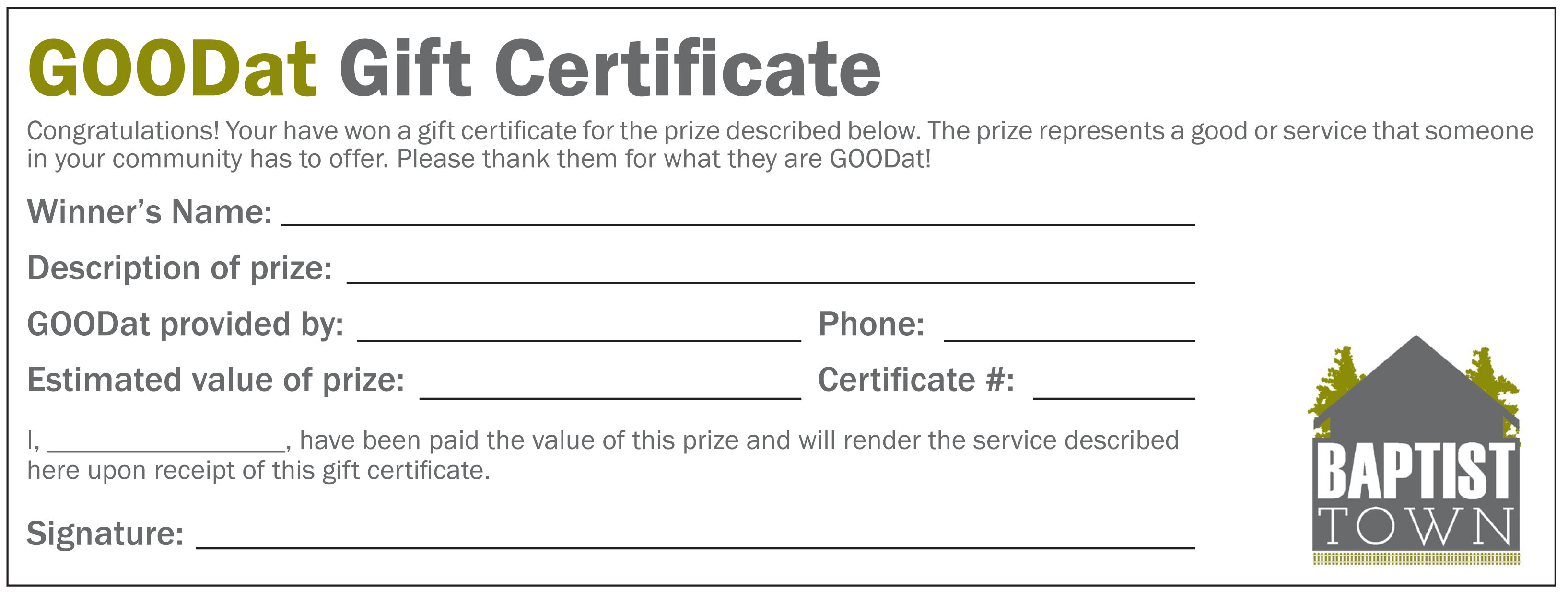
While many resident shared what they are GOODat through activities, others wrote on the GOODat chalkboard (to be hung in the neighborhood community center when it is complete), shared their stories of growing up in Baptist Town with the event videographer Dash Brown, or included their skills as a door prize in the form of a GOODat gift certificate. Raffle winners could choose from a hair cut, nail art, dance lessons, or car detailing from their entrepreneurial neighbors.

GOODAt gift certificate

Throughout the day and the planning process, I was impressed with the many volunteers who shared their time and efforts and the support from the greater Greenwood community (especially the City Public Works Department). As we asked each other, “What’s your GOODat?”, I believe we were acknowledging that we are all valuable, and that was the magic of the day: each individual and what they contribute to the community by simply showing up.

GOODat chalkboards

This slideshow requires JavaScript.

Saturday was the third annual Baptist Town Community Day. The theme was GOODat, and hundreds of residents came together and participated in activities celebrating the skills and talents of individuals and the neighborhood. Pictures of the day are coming soon, but here are some photos of the prep work that went into creating the blackboards used throughout the event.

a playground at last

Three little girls sat on a bench yesterday evening pointing at each new piece of playground equipment. “I’m going to play on that one, and I’m going to play on that one, and I’m going to play on that one.” As concrete footings were drying volunteers had to remind neighborhood kids that the playground wouldn’t be open until this morning.

Through the many surveys conducted in Baptist Town over the past ten years, residents have consistently emphasized the need for activities for children, specifically a playground. Despite this, when I began my job in January, no funding for a playground was in place. That changed when I met Cyndi Long from a local office of GE Capital Aviation Services. We began to work together, and she supported our grant application to the GE Volunteer Foundation. Cyndi and her co-workers were flexible and creative, and joined us in leading a kid’s only community meeting in April to brainstorm with neighborhood kids what they most wanted in the playground. As a result, we won a grant from the GE Volunteer Foundation for $4,000, and the local GECAS branch sponsored approximately $3,500 in play equipment and supplies. A crew of GE volunteers to construct the park was also a part of the grant award.

8 AM from south

Yesterday, twenty-eight volunteers from GECAS, including Greenwood residents and many who drove down from Memphis, brought to life what had previously only existed on paper. Starting with swings and bouncers on a grassy site in the morning, the group wrapped up the day with a completed playground by evening. When I visited the site this morning, the three little girls were true to their word – playing on every piece of equipment we had installed. In the short time I visited today, a dozen kids jumped, slid, climbed and see sawed. I know this demographic is enjoying the result of this project, but the realization of something so long asked for seems important to the community as a whole. “Hopeful” is a word I have heard a lot in regard to the playground project. I am honored to be a part of something hopeful, and am looking forward to GOODat day on Saturday where we continue to celebrate the people of Baptist Town of all ages.

I am grateful to so many people for realizing this playground. As I continue to work in the field of social impact design, each project demonstrates that nothing is completed by an individual, but is the product of many collaborators. Obviously, GE and Cyndi played huge roles, but whether you drove a truck, lent a wheelbarrow, lent a hand, wrote about the day, or enjoy hanging up-side-down from the monkeybars: thank you, this would not have happened without you.

public means politics

Who’s responsibility is it to ensure the availability of clean water, health care services and buildings, and safe, affordable housing?

Traditionally, governments have been tasked with these roles, but with a rapidly increasing world population and dramatic advances global connectivity, the social sector has seen significant growth in recent decades.

This growth has taken place in many ways, such as the scale and number of projects being undertaken, as well as the type of professional engaging in socially impactful work. Designers, in particular, are clamoring for work in the public interest field, and examples of exciting products, buildings and processes abound. I am a part of this group, and have no doubts about the merits of the public interest design field, but as our profession develops two cautionary principles stand out for me.

Designers are not trained in development or policy. While research and enthusiasm can provide support, expertise in one of these fields can make the difference between a long-term positive impact, and misguided good intentions. Many of us are accustomed to collaborating, but for public interest work, I believe it is important that we are intentional about seeking guidance from development, policy and similar experts. With this knowledge, we will be more likely to understand design as an important contributor to social and economic goals, not a stand alone solution.

Development and policy professionals can also introduce public interest designers to existing frameworks. As mentioned previously, many public interest projects are stepping in where a government body has not been willing or able to meet a public need. Though each project will present varying degrees of contentiousness, designers must be aware of who may be threatened by a proposed project, and if the proposal may be displacing an existing system, even one that is struggling. For example, a Housing Authority may be unwelcoming to a non-profit low-income housing developer based on perceived overlaps in mission and potential clientele.

As designers contribute increasingly more to the development field, we sometimes tear our hair out at the slow pace of projects and inexplicable allocations of funding, but rather than attempt to understand development solely through the lens of design, we need to be purposeful about finding ways to understand the systems we are hoping to impact.

street signs

New street signs were installed in Baptist Town last week. They are brown to designate the neighborhood as a historic district, and feature the new Baptist Town logo on the left side. It was a rush to order many of the park and entryway items before the grant period ended July 31, but the schedule has worked out better than I could have planned. Each week something new arrives, and the step by step face lift of Pearl St., Pelican St. and Avenue A continues!

thinking of PID week

permanent base pic

Some not to be named grant administrators visited Baptist Town last week. They weren’t sure why we would implement such an architectural sign in a neighborhood undergoing revitalization. The thought that came to mind was a phrase often used at Public Interest Design Week last March in Minneapolis. It was nice to have a succinct answer: “Everyone deserves good design.”


*The paper sign is a mock-up and will be replaced with a metal version later this month.

looking up

A few weeks ago I posted an article by the Greenwood Commonwealth documenting “setbacks” that the project has faced. June, in particular, saw the team slogging through disappointments and downturns. Despite these challenges, we persevered and in July and August (and hopefully continuing into September and October) the overall project is making significant visible progress.
Thanks again to the Commonwealth, and talented staff writer Jeanie Riess, the ups and downs have been given equal coverage, and this image of the new street lights on Avenue A graced the front page last week.

lights go up

17 heads are better than 1

945951_531452900238055_133276067_n

From the first days of design school, the concept of perspective is introduced. Technically, we think about how to draw or model something so that it looks realistic, often at eye level. We also learn about the experience of gaining various perspectives within or around a building, and how those perspectives impact the inhabitant. Less design oriented, is the idea of perspective from the standpoint of the background with which a professional approaches a project. Through the Affordable Housing Design Leadership Institute, Enterprise Community Partners engages designers and developers in a unique opportunity to bridge the gaps between these professionally diverse perspectives as they relate to community development and affordable housing.

 The two and a half day conference began with presentations and discussion of two projects that provided a platform for the remainder of the conference. Robert Ivy, the Executive Vice President and CEO of the American Institute of Architects (AIA) led a panel featuring the developers and architects of two award winning projects: Chicago’s own La Casa, the Richard H. Driehaus Award for Architectural Excellence in Community Design Winner; and Via Verde, the AIA/HUD Secretary’s Awards for Design Excellence in Affordable Housing Winner. The locations, challenges, financing, and joys of these projects were shared by the teams, and a theme that resonated throughout the conference became apparent: the human factor. The designs of both projects are rooted in the desires of residents, and the development teams were driving forces in realizing community stated goals. The collaborative processes pursued by both of these teams resulted in buildings that are not only applauded by the design community, but also respected by neighbors and cared for by residents. Both projects exemplified a James Rouse quote Sunny Fischer of the Driehaus Foundation shared, “Good design doesn’t cost, it pays.”

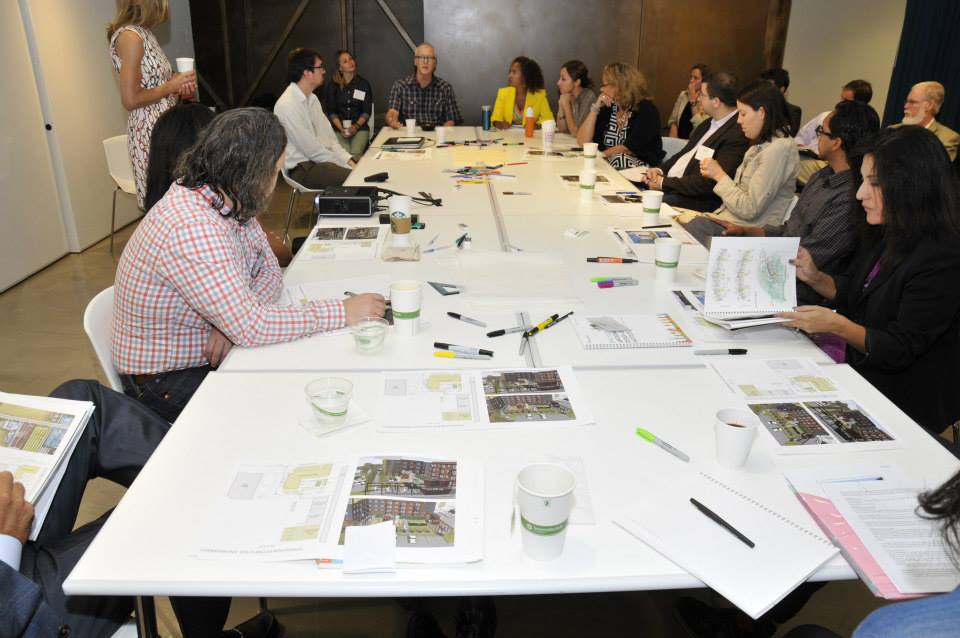
Building upon the opening night, the conference continued at the offices of Cannon Design. The agenda alternated between design team members discussing best practices that they have learned through experience, and development team members presenting projects in the schematic design phase. These development team presentations then became the basis of a round table format charette. While nuts and bolts often were the starting point of these charettes (dimensions of fire truck access and the differences between 4% and 9% housing tax credits), these concrete questions became jumping off points for broader, more probing topics. How can shared spaces encourage physical activity? How can assets and obstacles in the site plan be seen in a new way? Who will user groups be and what will they want?

Each year at AHDLI, development teams explore their work through the lens of the designer and vice versa, but the unique and pervasive theme of AHDLI 2013 was the importance placed upon the perspective of neither the designer nor the developer, but the resident.